Source Seamless Fabric Yoga Jumpsuit for Cycling Fitness Gym
Compare 30 seamless fabric yoga jumpsuit options from verified suppliers. These stretchy, custom-fit garments in nylon and spandex support cycling, fitness, and gym activities with customizable colors and logos; compare the available evidence and request quotations based on your requirements.
Key considerations
Products List


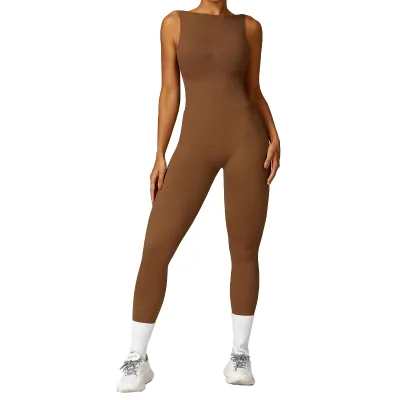
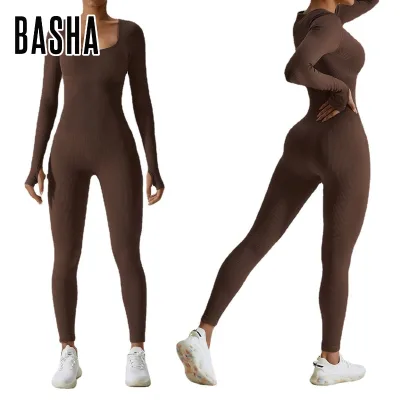
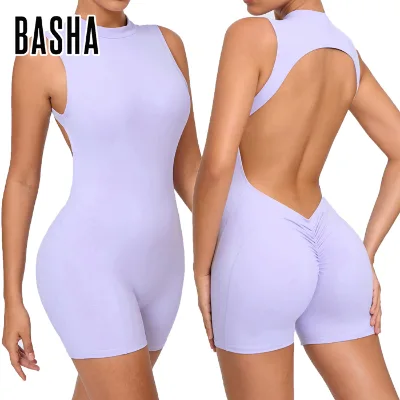
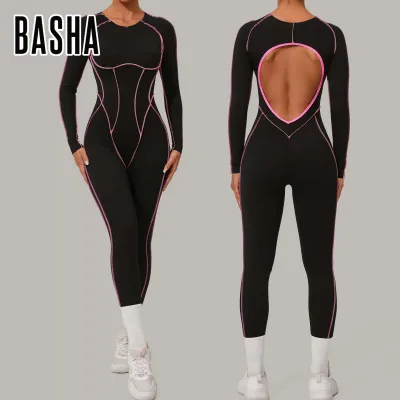


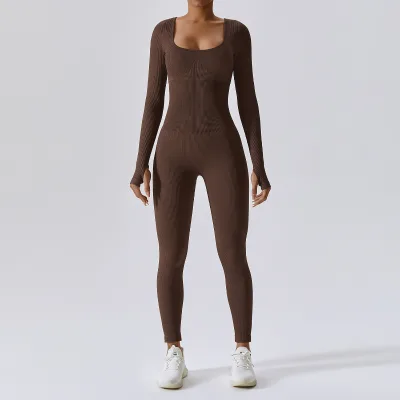
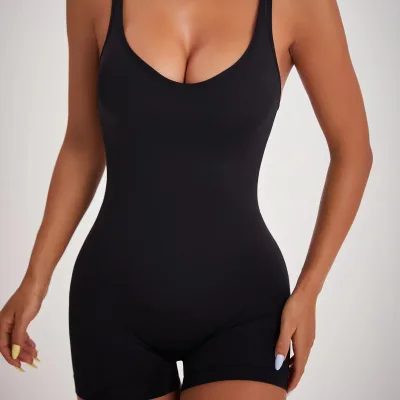
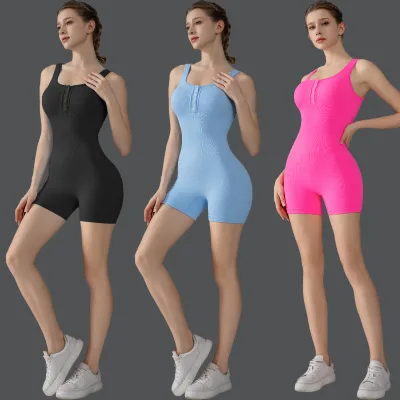
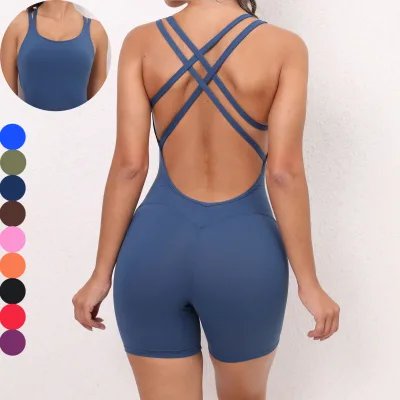

Comprehensive Sourcing Guide
Seamless Fabric Yoga Jumpsuit Sourcing Guide
A seamless fabric yoga jumpsuit is a one-piece technical garment knitted with minimal seaming to reduce chafing during movement, and it occupies a distinct niche in the women's activewear category. The listings observed here span multiple models, including JX-LT9819, HYZZ-2662, HYZZ-XY-2019, BS-LT3305, and FYJS4007, produced in Guangdong, China, with OEM and ODM service explicitly offered. Buyers should treat these listings as evidence of manufacturing capability rather than as guarantees that every listed style matches their needs, since attributes vary across models even within the same category.
Before committing to a program, define your target consumer and use case. The observed products position themselves for yoga, fitness, gym, and cycling, with some models extending to ball sports, soccer, racing, and skiing. This breadth matters because a jumpsuit engineered for studio yoga may not carry the abrasion resistance or compression profile needed for endurance cycling. Decide early whether you need a sleeveless square-neck silhouette or a long-sleeve slim-fit version, whether sizes S through L cover your market, and whether your brand requires custom printed patterns or plain-color core stock.
Product Scope and Observed Listing Signals
The observed listings share several consistent signals. Fabric blends center on nylon, polyester, and spandex, with seamless construction and stretchy hand-feel cited as core technical attributes. Weight figures appear across models at 317g, 347g, and 350g, giving buyers a useful benchmark for comparing fabric density and coverage. Designs emphasize good fitting and slim fit, and several listings advertise rich color options, with blues, pinks, blacks, olive, brown, red, white, purple, and grey appearing across the range. Packaging is standardized at one piece per polybag across multiple models.
Quantity flexibility is a notable commercial signal. Listings state support for small quantities, with observed MOQs ranging from 1 to 50 pieces and at least one model reporting 1,000 units available. This spread suggests suppliers in this segment can serve both sample-stage buyers and mid-volume programs. Customization signals are equally consistent: logo customization, custom labels, and customized patterns appear on multiple listings, and OEM or ODM supply types are declared. Sample lead time is stated at 5–7 workdays after details are confirmed, which buyers can use when sequencing development milestones.
Technical Specifications to Verify
Fabric composition deserves first scrutiny. The listed nylon/polyester/spandex blends are standard for seamless activewear, but the exact ratio determines stretch recovery, compression hold, and moisture management. Ask each candidate supplier for the knit structure, grams per square meter, and spandex content, then test recovery after repeated stretch cycles. The stated garment weights of 317–350g offer a starting reference, but weight alone does not confirm quality; a heavier fabric may simply indicate less efficient knitting. Verify that seamless zones sit where friction matters most and that size grading across S–L maintains fit consistency.
Construction details separate acceptable jumpsuits from returns-generating ones. Confirm whether the neckline is genuinely a square neck or collarless design as listed, check sleeve length against your tech pack for both sleeveless and long-sleeve variants, and inspect flatlock or bonded transitions at the bust, waist, and gusset. Some listings reference automated cutting, which reduces variance but should be validated on physical samples. Request full-length measurement charts, shrinkage and twist expectations after washing, and opacity testing under stretch, since a one-piece garment cannot hide a sheer panel the way separates can.
Compliance and Safety Documentation
Although none of the observed listings state certifications, seamless yoga apparel sold into regulated markets must meet documentation requirements the buyer is responsible for confirming. For any destination market, ask suppliers which restricted-substance protocols their nylon, polyester, and spandex yarns and dye lots comply with, and request third-party test reports for the finished garment rather than yarn-stage declarations alone. Dyes and finishes used in richly colored styles warrant particular attention, as dark and saturated shades carry higher risk of non-conformance on colorant-related limits.
Beyond chemical safety, verify labeling and claims compliance. Fiber content labels must match the actual blend within the tolerance rules of your market, care instructions must reflect the fabric's real wash behavior, and country-of-origin marking should correctly state China or the actual production location. If you market the garment with performance claims such as breathability or four-way stretch, ensure you hold supporting test data before publishing them, since the listing phrase "Breathable Yoga Jumpsuit" is supplier marketing rather than verified performance. Keep signed compliance declarations on file for every production season.
Cost Drivers and Commercial Terms
Observed listing prices range from roughly $4.16 to $22.99, a spread that reflects real differences in fabric weight, pattern complexity, and order scale rather than a single market price. The main cost levers are spandex content, knitting efficiency on seamless machines, dyeing depth, and customization level. A plain-color core style with logo-only branding will price far below a fully customized printed pattern. Use the stated 5–7 workday sample lead time to test responsiveness, then negotiate production timelines separately, since sample speed rarely predicts bulk capacity.
Commercial terms should be nailed down in writing before any deposit. Confirm MOQ per color and per size rather than per style, because a 50-piece MOQ spread across five colorways may not be feasible. Clarify whether the listed price includes polybag packaging, labels, and freight terms, and whether small-quantity support carries a surcharge. Agree on payment structure, tooling or pattern fees for custom designs, and who owns the graded pattern after development. For customized items, lock approved samples as the binding quality reference and state revision limits in the contract.
Supplier Qualification and Quality Control
Qualify suppliers through evidence, not listing claims. The observed declarations—OEM/ODM supply type, logo and label customization, small-quantity support, and Guangdong origin—are useful screens, but they do not measure capability. Request business licenses, factory photos or a virtual tour, references from comparable seamless activewear programs, and evidence of in-house knitting versus outsourced production. Ask specifically about seamless knitting machine types and gauge ranges, since the fineness of the knit directly controls how premium the finished jumpsuit feels and how well it holds shape.
Build a three-stage inspection protocol. At pre-production, approve a sealed sample covering fabric, color, fit, and label placement. During production, inspect in-line at roughly 20–30% completion to catch knitting defects, shade variation between dye lots, and sizing drift while correction is still possible. At final inspection, use AQL-based sampling to check seam integrity, measurement against the graded chart, stain and needle damage, and polybag packaging. The stated 1-piece-per-polybag standard should be verified in practice, including carton markings and the noted carton dimensions such as 40302cm or 34242cm.
Long-Term Procurement Checks
Sustained sourcing success depends on monitoring repeatability across seasons. Re-measure production garments against your original sealed sample each cycle, because seamless knitting parameters can drift when factories change yarn suppliers or machine settings. Track defect rates by model and by color, since saturated shades in the observed palette—deep purples, reds, olive—may behave differently from black and grey cores. Keep a running fabric log with composition, weight, and mill details for each model, including the listed variants, so a discontinued fabric can be matched or formally re-approved rather than silently substituted.
Also build structural resilience into the relationship. Diversify across at least two qualified suppliers in this category once volumes justify it, and confirm each can scale from small-quantity runs toward your growth volumes without renegotiating every term. Revisit compliance documentation annually, refresh test reports when fabrics or dye suppliers change, and re-verify labels each season. Finally, maintain disciplined records of customization assets—your logo files, label artwork, and custom patterns—under agreements that secure your ownership, so switching suppliers remains a genuine option rather than a hostage situation.
FAQs
What fabric composition is used for these seamless yoga jumpsuits?
The jumpsuits are constructed from a blend of nylon, polyester, and spandex to ensure durability and comfort. This material combination provides excellent stretch and recovery, making the garments suitable for high-intensity activities like cycling and gym workouts. The seamless technical design further enhances the fit and reduces friction during movement.
Can buyers customize the logo and label on the jumpsuits?
Yes, customization is available for both logos and labels to support private labeling needs. Buyers can provide their own designs for the pattern type and label placement. This OEM and ODM service allows brands to create unique products that align with their specific identity and market requirements effectively.
What is the typical sample lead time for these products?
The sample lead time is typically 5-7 workdays after all design details are confirmed. This timeframe allows the manufacturer to produce accurate prototypes for buyer review. Once the details are finalized, the production process can begin promptly to meet the agreed-upon delivery schedules for bulk orders.
Which sizes are available for the seamless yoga jumpsuits?
The available size range covers S to L to accommodate various body types. These sizes are designed to provide a slim fit that enhances the good fitting design of the jumpsuit. Buyers should consult the specific size chart for each model to ensure the correct fit for their target demographic.
What are the packaging details for the yoga jumpsuits?
Each jumpsuit is packed individually in a polybag to protect the garment during shipping. The standard packing dimensions are approximately 40x30x2cm or 34x24x2cm depending on the specific model. This packaging method ensures the items remain clean and undamaged while facilitating efficient storage and handling for the buyer.
What colors are offered for the seamless yoga jumpsuits?
A variety of colors are available, including blue, pink, black, olive, brown, red, white, purple, and grey. These rich colors allow buyers to choose options that match current fashion trends or specific brand palettes. The fabric quality ensures that the colors remain vibrant and resistant to fading after repeated use.